

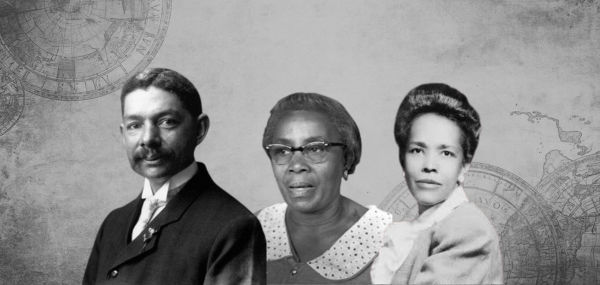
When we talk about leadership, most of us think of big moments — speeches, names, applause. But some of the most powerful leadership happens far from the spotlight. It occurs in unwavering determination. In painful choices. In firm commitment, even if there is no reward.
The decisions that shape history often happen in silence—after a meeting ends, after a line gets crossed, after someone realizes that going along would be easier, but not right. That kind of moral clarity that doesn’t draw attention, but changes everything. It reminds us that small, consistent actions make a big impact.
We remember the headlines. But leadership often comes from those who were never the headline. People who built something real without recognition, held the line when it cost them, and kept the work moving when nobody was watching.
These leaders didn’t rise because it was convenient. They endured because they refused to trade conviction for comfort. And their legacy shows up now, in the pivotal moments where the right thing still isn’t the easy thing.
This story isn’t about glory or recognition; it’s about the leadership that builds foundations and shapes what’s possible long after the crowds have disappeared.
The Power of Vision: Robert Rochon Taylor
Robert Rochon Taylor didn’t wait for ideal conditions. In 1942, as the first Black chairman of the Chicago Housing Authority, he proposed a bold initiative: integrated public housing. Black and white families living side by side.
Taylor also understood what he was walking into. The resistance was real.
Segregation laws. Resistance from city officials.
People who refused even to talk about fairness.
Political pressure to settle. To be quiet. To look the other way.
A thousand reasons to delay.
But he understood what was at stake.
Housing wasn’t just about bricks and mortar. It was about dignity, access, and belonging.
Taylor was confronting a city’s habit of keeping people apart, long before diversity became a strategy. Every push for integration encountered pushback. Resistance. Not just policy—habit. The kind that dresses up segregation as “stability.”
When the city council blocked his plan, he could’ve stayed. He could’ve softened the edges. But he didn’t.
Taylor walked away, choosing to step down rather than be complicit in a system that refused to change.
There was no grand speech. It was a bold declaration: not this, not on my watch. Taylor wasn’t just idealistic. He understood power and how policies and systems reflect what you value. That kind of leadership doesn’t trend or win awards. But it preserves integrity and creates possibilities.
In 2023, a McKinsey report found that companies in the top quartile for ethnic diversity on executive teams were 39% more likely to outperform on profitability. Taylor saw the value before the data caught up.
The Power of Persistence: Septima Poinsette Clark
For decades, Septima Poinsette Clark taught in segregated schools across the South. When fear and racist laws stripped her of her job because of her civil rights activism through the NAACP, she didn’t walk away from the work. She changed the location.
She taught wherever she could—living rooms, beauty shops, church basements. No budget. No title. Just people learning what they were never supposed to know.
In 1957, on Johns Island, South Carolina, Clark created Citizenship Schools to help Black adults pass the literacy tests that kept them from voting. It wasn’t glamorous; it was painstaking. Deliberate. Effective.
By the early 1960s, more than 700,000 Black citizens had registered to vote through these programs.
Clark’s mission was simple: no one should remain powerless because of a lack of knowledge. Others talk about empowerment. She lived it—one lesson, one neighbor, one voter at a time.
Her approach challenged the usual rules of leadership. She didn’t centralize power. She shared it. She showed that you don’t have to wait for someone to grant you power. You can claim it and help someone else to do the same.
Today, more leadership teams talk about “collaboration” and “distributed ownership,” but Clark practiced it when it counted most—without permission, without applause.
When you feel stuck waiting for approval, remember that Septima Clark never asked for it. She got to work. You can, too.
The Power of Collective Leadership: Ella Baker
Ella Baker didn’t need a title to lead. She was one of the movement’s most influential organizers—though few people outside of history classrooms know her name.
She began her work with the NAACP in the 1940s, traveling from town to town helping local Black communities establish their own chapters. Not to make them dependent but to make them strong. Her leadership was personal, grounded in relationships. She listened more than she spoke. Her questions opened space. Her presence built trust.
Later, when younger activists grew frustrated with top-down strategy, she didn’t argue. She encouraged them to build something of their own. That’s how the Student Nonviolent Coordinating Committee (SNCC) began—in Baker’s orbit, but on their own terms. It would become one of the most influential forces in the civil rights movement.
Baker believed real power was shared, not claimed.
Her approach reframed influence not as control but as a shared effort that strengthened others.
She never tried to command a stage. She built the infrastructure that enabled progress, not by demanding authority, but by giving others the tools and the responsibility to lead.
That kind of leadership still matters. In a world that rewards performance and visibility, Baker’s example reminds us that durable change is rarely flashy. It’s often rooted in patience, trust, and the decision to build others up even when no one’s watching.
Today, research confirms what Baker modeled decades ago: organizations with strong internal networks—where influence is distributed rather than hoarded—are more adaptive, resilient, and innovative. A 2022 MIT Sloan study found that companies that encourage cross-functional collaboration are 36% more likely to exceed performance expectations.
Baker didn’t have data. She had discernment. She knew that leadership wasn’t about making yourself central. It was about creating space for others to rise.
Bringing History into Today’s Leadership
These aren’t just stories about the past. They’re templates for how effective leadership still works, especially when the stakes are high and the circumstances are uncomfortable.
At some point, every leader runs into a decision that won’t be popular or easy. One that asks whether you’re here for clarity or just consensus. That tension hasn’t gone anywhere.
The Center for Creative Leadership found that one of the top challenges facing modern executives isn’t technical skill—it’s navigating human friction: misalignment, competing priorities, and the pressure to keep everyone happy even when it comes at a cost.
Robert Rochon Taylor didn’t remain silent when the deal was blocked. He walked away with his principles intact.
Septima Poinsette Clark didn’t wait for access. She navigated barriers and relinquished power to others.
Ella Baker didn’t center herself. She moved people forward by refusing to stand in their way.
They held the line. And made space for others to lead.
None of them built legacies on visibility. They built them on courage, clarity, and consistency. That’s why their work is still relevant.
Their legacy doesn’t ask us to imitate them. It asks us to examine the decisions before us now.
- What conviction will I hold, even when it costs me?
- How will I use my platform or position to strengthen someone else?
- Whose voice or cause will I amplify so it’s not overlooked?
The answers won’t always feel grand. But they’ll shape what kind of leader you are when no one’s keeping score.
Influence like that lasts. Beyond the title. Out of the spotlight. Just the choices you make when the easy way is right there, and you still choose the better one